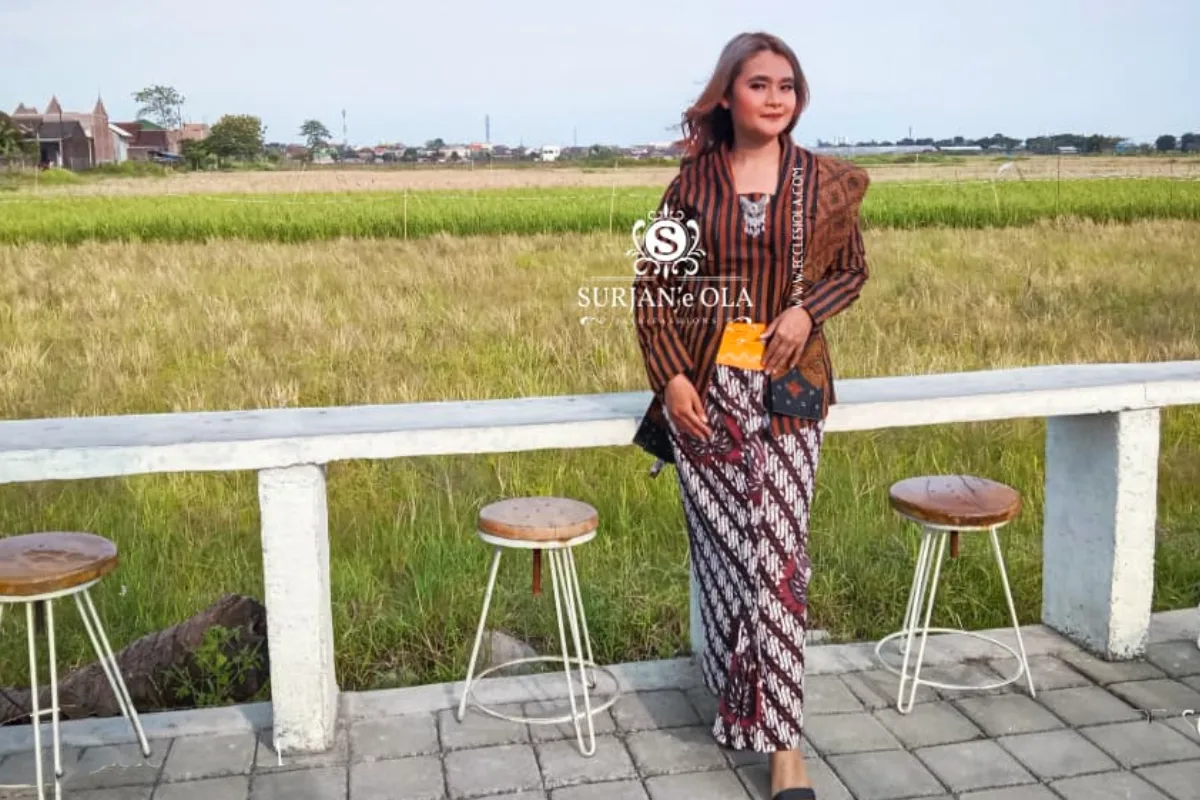
--- title: "Kebaya Lurik: The Timeless Charm of Javanese Traditional Dress" description: "An introduction to kebaya lurik: the history of lurik fabric, the meanings behind its motifs, and mix-and-match inspiration to look graceful at traditional events or in modern styles." slug: "kebaya-lurik" ---
There is something special about the kebaya lurik. Its stripes look simple, but that is precisely where its appeal lies. The orderly pattern, modest colors, and elegant kebaya cut make this garment feel familiar to the daily life of Javanese people, while remaining suitable for a range of important occasions.
Kebaya lurik is not just a choice of traditional clothing. It is also a way to wear cultural heritage in a lighter, more relevant way. With the right combinations, kebaya lurik can be worn to family gatherings, cultural commemorations, photoshoots, school events, and even as casual wear that still carries a Nusantara touch.
What Is Kebaya Lurik?
Kebaya lurik is a kebaya that uses lurik fabric as its main material or as a visual element in the garment. Unlike kebayas made from brocade or plain cloth, kebaya lurik highlights the beauty of striped woven patterns. Those motifs can appear as fine stripes, wide bands, specific color combinations, or more complex pattern arrangements.
Within the corpus of Javanese dress, kebaya lurik is often made in classic cuts such as the kebaya kutubaru. This model has a connecting panel at the center of the chest that gives structure to the look while creating a distinctive silhouette. However, contemporary kebaya lurik designs can also be made more practical and flexible so they are comfortable for both adult women and children.
Getting to Know Lurik Fabric, the Traditional Striped Cloth
The term lurik is related to the Javanese words lorek or larik, which mean "line" or "stripe." That is why stripes are the primary element immediately recognizable in this fabric. But lurik is not limited to its visual appearance. In Javanese tradition, the stripes of lurik are often understood as symbols of simplicity, honesty, perseverance, and a well-directed life.[1]
Traditionally, lurik fabric is produced through weaving. In several lurik centers, including areas around Surakarta (Solo) and Klaten, the process uses an alat tenun bukan mesin (ATBM), a non-mechanized handloom. Traditional techniques give each cloth its own character, from texture and thread density to subtle color nuances.[2] [3]
In the past, lurik was used as clothing, shawls, kemben (traditional torso wraps), and other items related to daily life. Lurik also appeared in various ceremonies and traditions connected to life-cycle events. This shows that lurik has cultural value beyond its role as mere material for clothing.[2]
> Lurik is not just a striped cloth. Behind the arrangement of threads and colors lie stories of simplicity, hope, and the dedication of communities who sustain the tradition.
Meanings Behind Lurik Motifs and Stripes
Each lurik motif can carry different meanings depending on the region, tradition, and context of use. Therefore, the meaning of motifs should be understood as part of cultural knowledge, not as a single rule that applies to all lurik cloth.
Some motifs known in the lurik tradition include Udan Liris, Telupat, and Tuluh Watu. The Udan Liris motif, meaning "drizzle," is associated with hopes for fertility and prosperity. Telupat is connected to the number seven and is often linked to pitulungan (assistance) and pitutur (advice). The Tuluh Watu motif can be interpreted as a symbol of strength.[1]
Those meanings make kebaya lurik feel more personal. When wearing it, a person is not only choosing a color or cut but can also appreciate the values and stories that accompany the cloth. This is what keeps lurik appealing amid changing fashions: its appearance is simple, yet it offers a wide space for interpretation.
Why Kebaya Lurik Remains Appealing Today
One of kebaya lurik's strengths is its ability to bridge traditional style and modern needs. The striped motif gives the kebaya a distinctive look without being excessive. Its character is strong enough to be the focal point yet easy to pair with batik, skirts, trousers, or simple accessories.
Kebaya lurik is also suitable for anyone who wants to start wearing traditional dress without feeling overly formal. For family events or cultural activities, the kebaya can be combined with a jarik and classic accessories. For a more relaxed setting, kebaya lurik can be worn as a top with a plain bottom or as an outer layer over a basic outfit.
For families, kebaya lurik for children can be a way to introduce traditional clothing early. Comfortable cuts and attractive motifs allow children to look neat without losing freedom of movement. Kebaya lurik for children can be used for school events, stage performances, Kartini Day commemorations, or family photo sessions.
Kebaya Lurik Mix-and-Match Inspiration
1. Kebaya Lurik with Jarik Batik
The combination of kebaya lurik with a jarik batik is a classic choice that always looks elegant. Choose a jarik with a not-too-busy color scheme so the stripes of the kebaya remain the main visual element. For formal occasions, complement the outfit with a simple sanggul (hair bun), a brooch, and selop (traditional slip-on shoes).
2. Kebaya Lurik with a Long Skirt
If you want a traditional look that is more practical, wear kebaya lurik with an A-line long skirt or a skirt in a coordinating color. This style suits family events, receptions, or cultural activities that require a neat appearance without being too rigid.
3. Kebaya Lurik with Plain Trousers
Kebaya lurik can look modern when paired with straight-cut trousers or culottes. Choose neutral colors such as black, cream, brown, or ivory. Add flats, mules, or plain sneakers to create a more relaxed traditional-inspired look.
4. Kebaya Lurik as an Outer Layer
For a casual style, kebaya lurik can be worn as an outer layer over a plain inner top. This highlights the lurik motif without making the whole outfit feel too formal. Woven bags or accessories made from natural materials can enhance a warm, modest impression.
The following table can help determine pairings according to your needs:
| Occasion | Pairing | Impression Conveyed |
|---|---|---|
| Traditional ceremony or reception | Kebaya lurik, jarik batik, brooch, and selop (traditional slip-on shoes) | Elegant and classic |
| Cultural activities or school events | Kebaya lurik, long skirt, and comfortable shoes | Neat and characterful |
| Family gatherings | Kebaya lurik, simple batik cloth, and minimal accessories | Warm and elegant |
| Casual style | Kebaya lurik as an outer layer, plain inner top, and tailored trousers | Modern and flexible |
| Family uniform | Matching-color kebaya lurik for adults and children | Coordinated and memorable |
Tips for Choosing a Kebaya Lurik
When choosing a kebaya lurik, first pay attention to fabric comfort and correct sizing. Woven fabrics can have different textures, so choose a material that feels comfortable against the skin. Also make sure the shoulder width, chest circumference, sleeve length, and overall kebaya length fit the wearer.
Consider the character of the motif as well. Vertical stripes typically create a lengthening effect, while horizontal stripes can give a broader appearance. However, the most important thing is to choose motifs and colors that make the wearer feel confident. Traditional kebaya does not always have to be dark; brighter colors can also look elegant when balanced thoughtfully.
To keep kebaya lurik durable, follow the care instructions on the product. Generally, woven fabric should be washed gently, not wrung out too harshly, and dried in a shaded area away from direct sunlight. After drying, store the kebaya clean and not too tightly packed so the fabric fibers remain preserved.
Kebaya Lurik as an Appreciation of Local Products
Choosing kebaya lurik means giving space for traditional fabrics to continue being used in daily life. Behind a single piece of cloth there is the knowledge of weaving, the dedication of artisans, and a local economic chain that needs care. Research on lurik also shows that this craft provides economic benefits to communities in production centers.[3]
Ola Store Solo offers a collection of lurik and Javanese garments from local artisans in Solo, including Kebaya Kutubaru Lurik made from Lurik ATBM woven fabric. The collection is available in various motifs and colors, so it can be tailored to personal, family, or event needs. Kebaya lurik for children is also available for families who want to introduce traditional clothing in an enjoyable way.
Conclusion
Kebaya lurik demonstrates that traditional dress does not have to feel outdated or difficult to wear. With its simple striped motif, deep cultural meanings, and versatile pairing options, kebaya lurik can appear in many settings—from formal events to everyday style.
Wearing a kebaya lurik is a simple way to celebrate cultural identity while supporting the sustainability of local artisans' work. If you are looking for Solo kebaya lurik for adults or children, explore the Ola Store Solo collection or contact us via WhatsApp for product availability.
References
[1]: https://uny.ac.id/id/berita/lurik-indonesia-berkembang-mengikuti-zaman "Yogyakarta State University — Lurik Indonesia, Evolving with the Times"
[2]: https://jurnal.isi-ska.ac.id/index.php/ornamen/article/view/1059 "Sri Wuryani — Lurik and Its Functions in the Past, Ornamen ISI Surakarta"
[3]: https://ejournal.undip.ac.id/index.php/humanika/article/view/45261 "Asri Kamila Ramadhani and Sony Sukmawan — The Existence of Lurik Prasojo Klaten: History and Philosophy"
Editorial Note
This article is written for Ecclesiola's general readers, particularly women and families who want to learn about, choose, and wear Javanese traditional clothing in formal or modern contexts. Claims about motif meanings are presented as knowledge related to particular traditions, not as a single meaning that applies to all lurik cloth.