Solo is one of Java’s cities where traditional culture remains an important part of everyday life. Alongside its royal heritage, cuisine, and cultural attractions, Solo is also a rewarding destination for travelers who want to discover traditional textiles and take home an authentic piece of Javanese clothing.
For first-time visitors, however, shopping for traditional clothing can feel a little overwhelming. You may come across striped lurik fabric, men’s surjan shirts, women’s kebaya, batik jarik cloth, and many other garments in different fabrics, colors, patterns, and levels of formality.
This guide introduces several types of Javanese clothing commonly found in Solo, explains where to shop, and shares practical tips for choosing traditional clothing for yourself or as a cultural souvenir.
Why shop for Javanese clothing in Solo?
Solo has a strong connection with Javanese culture, including the development of traditional textiles and clothing. In the city, you can find garments made for everyday wear, family gatherings, weddings, cultural events, performances, and formal occasions.
Shopping for traditional clothing in Solo is also different from shopping in a modern mall. You can compare fabrics in person, feel the texture, look at different motifs, and ask the seller about sizing and care instructions.
For travelers, this makes the shopping experience more meaningful. Lurik, surjan, kebaya, and jarik are not simply items to pack into a suitcase. They can also become part of the story you bring home from Solo.
Getting to know traditional Javanese clothing
Javanese traditional clothing comes in many forms and serves different purposes. Some garments are still worn in everyday life, while others are more commonly used for traditional ceremonies, weddings, cultural events, or special occasions.
Here are several types you are likely to encounter:
| Type of clothing | Common uses | Main characteristics |
|---|---|---|
| Lurik | Fabric, garments, and craft products | Distinctive stripes or simple color patterns |
| Surjan | Traditional Javanese men’s clothing | A stand-up collar, long sleeves, and a buttoned front |
| Kebaya | Traditional women’s clothing | An elegant fitted style, usually worn with a traditional skirt or cloth |
| Jarik batik | A traditional lower garment or cloth | Batik fabric available in many motifs and production techniques |
| Woven lurik fabric | Garments or fabric sold by the piece | A woven texture with distinctive stripes and color combinations |
Not every traditional garment sold in Solo is intended for a formal ceremony. Many products are designed for practical, everyday use, with lighter fabrics and more relaxed cuts.
Lurik: a beautiful way to discover Javanese textiles
Lurik is a traditional textile best known for its stripes and simple linear patterns. Although the overall design may appear understated, differences in color, stripe width, and weaving technique give each fabric its own character.
For travelers looking for a meaningful connection to Javanese culture, lurik is a practical choice. It is available as fabric by the meter, as well as in the form of shirts, surjan, kebaya, children’s clothing, bags, and other craft products.
Lurik made on traditional looms
Some lurik is made using an ATBM, short for Alat Tenun Bukan Mesin, or a non-machine loom. This process depends on the skill of the weaver and can produce a distinctive texture and character.
Not all lurik sold in stores is made in the same way. Some fabrics are machine-produced, some are woven on traditional looms, and others combine lurik with different materials.
If the production method matters to you, ask the seller about:
- the type of loom used;
- the fabric composition;
- the fabric’s thickness and texture;
- whether it may shrink after washing;
- recommended care instructions.
Why lurik makes a good souvenir
Lurik is relatively easy to incorporate into a modern wardrobe. It can be tailored into clothing, worn as an outer layer, paired with trousers or a skirt, or kept as a traditional textile collection.
There is also a wide range of colors. Some lurik uses soft, natural-looking tones, while other designs feature brighter combinations for a more contemporary look.
Surjan lurik for men
Surjan is a traditional Javanese men’s garment with a distinctive silhouette. It generally features a stand-up collar, long sleeves, and a buttoned front.
One popular variation is the surjan made from lurik fabric. A lurik surjan can look polished, dignified, and comfortable enough for a range of occasions.
It can be worn for:
- family gatherings;
- cultural events;
- weddings;
- national celebrations;
- art performances;
- family photo sessions;
- coordinated outfits or uniforms;
- relaxed looks styled with modern clothing.
What to check when buying a surjan
Check the shoulder width, chest measurement, sleeve length, body length, and overall cut. Surjan designs can vary from one maker to another, so the same stated size may not fit exactly the same way.
Pay attention to the fabric weight as well. Heavier fabric can create a more formal appearance, but it may feel warm when worn for a long time. If you are traveling to or living in a warmer climate, a lighter fabric may be more comfortable.
A surjan can be paired with a batik jarik, tailored trousers, or jeans, depending on the occasion. A blangkon, the traditional Javanese head covering, and traditional slip-on shoes can be added for a more classic look.
Lurik kebaya for women
Kebaya is one of the best-known forms of traditional women’s clothing in Indonesia. In Solo, you can find kebaya in many different styles, fabrics, and levels of formality.
A kebaya made with lurik fabric offers a traditional look with a simple, distinctive character. It can be worn for family events, cultural activities, Kartini Day celebrations, graduation ceremonies, family portraits, or everyday outfits.
Tips for choosing a lurik kebaya
If you are buying a kebaya for yourself, consider the shoulder width, bust measurement, sleeve length, and garment length. Make sure the design suits the way you plan to wear it.
If you are buying a kebaya as a gift, knowing the recipient’s measurements will make the process much easier. You can also choose a slightly more relaxed style or ask whether the garment can be altered.
Pay attention to how the kebaya is fastened. Depending on the design, it may use buttons, pins, or a kutubaru panel across the front. Ask the seller whether the fabric wrinkles easily, is likely to shrink, or requires special care.
Jarik batik as a traditional finishing touch
In addition to lurik, jarik batik is often chosen to complete a traditional Javanese outfit. A jarik can be worn with a surjan, kebaya, or other traditional garments.
Batik comes in many different motifs. Some designs feel classic and formal, while others are more understated for everyday wear. The production method may also vary, including hand-drawn batik, stamped batik, and other techniques.
When choosing a jarik, consider its length, width, fabric, motif, color, and intended use. If you are not familiar with wearing one, ask the seller to explain how to wrap or style it.
Shopping for Javanese clothing at Pasar Klewer
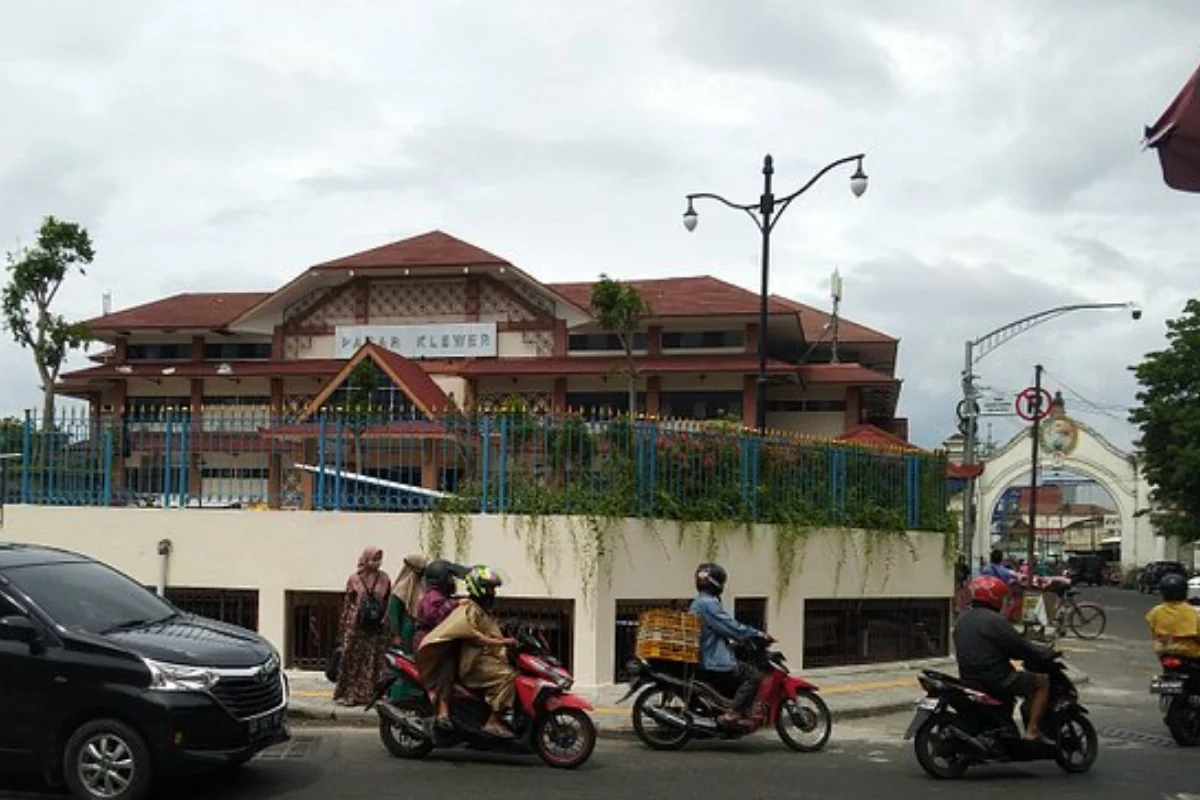
One of Solo’s best-known textile and clothing markets is Pasar Klewer. Located in the city center, the market is an interesting destination for travelers who want to browse traditional fabrics, clothing, and related products.
Shopping at a traditional market offers a different experience from shopping in a modern retail center. You can compare fabrics, colors, motifs, and styles from different sellers. Speaking directly with the seller also makes it easier to ask about sizing, availability, and care instructions.
Because Pasar Klewer offers so many choices, it helps to decide what you are looking for before you arrive. You might be searching for lurik fabric, an adult surjan, a kebaya, children’s clothing, jarik batik, or fabric for tailoring.
Tips for shopping at a traditional market
To make your shopping experience more comfortable, keep these tips in mind:
- Make a shopping list. Decide which types of products and how many items you want to buy.
- Compare fabric and construction. Do not compare price alone; look at the quality of the fabric and the neatness of the stitching.
- Ask about the product. The seller can explain the fabric, sizing, care instructions, and available colors.
- Leave room in your luggage. Fabric and clothing can add more weight than expected.
- Keep your receipt or purchase notes. This is useful if you buy several items in different sizes and patterns.
Tips for choosing Javanese clothing as a souvenir
1. Decide what type of product you want
Choose whether you are looking for lurik fabric, a surjan, a kebaya, a jarik, children’s clothing, or a craft product. Having a clear goal makes shopping much easier.
2. Check the size carefully
For ready-to-wear garments, make sure the size is suitable for the person who will wear them. If you are buying for someone else, note their shoulder width, chest measurement, sleeve length, and garment length before your trip.
3. Ask about the fabric and care instructions
If you are unfamiliar with the fabric, do not hesitate to ask. Some textiles may require hand washing, mild detergent, or drying in the shade.
4. Consider the motif and color
Lurik is available in many stripe patterns and color combinations. Choose a design based on personal taste, how you plan to wear it, and the other clothing you expect to pair it with.
5. Inspect the stitching and finishing
For ready-to-wear garments, check the buttons, shoulder seams, sleeve ends, collar, and inside stitching. Small finishing details can affect both comfort and durability.
6. Think about how you will take it home
If you are continuing your travels, consider the item’s size and weight. Fabrics and clothing that fold easily are usually more convenient than products with bulky structures or accessories.
7. Choose according to the occasion
Clothing for a formal event is not always the same as clothing for everyday use. Tell the seller when and where you plan to wear the item so they can suggest a suitable fabric and style.
Caring for Javanese clothing after your trip
Care instructions vary by fabric, but the following habits can help:
- Wash new fabric separately the first time.
- Use water and mild detergent appropriate for the material.
- Avoid twisting the fabric aggressively.
- Dry it in the shade if the color is sensitive to direct sunlight.
- Iron at a suitable temperature and use a pressing cloth when needed.
- Make sure the fabric is completely dry before storing it.
- Keep it in a clean, well-ventilated place.
- Follow the care instructions provided by the seller or shown on the label.
If you have purchased a textile you have never cared for before, asking the seller about the first wash can help you avoid damaging it.
Bringing home a piece of Solo’s culture
Buying traditional clothing is about more than adding a new garment or textile to your suitcase. For travelers, lurik, surjan, kebaya, and jarik can offer a simple way to connect with Javanese culture.
Every motif, fabric, and design has its own character. Learning a little about the story behind what you buy can make your shopping experience in Solo more memorable.
Traditional clothing does not always have to be worn in a highly formal way. Lurik can be paired with modern clothes. A surjan can be styled for a more relaxed look. A kebaya can be worn with a contemporary skirt or trousers, depending on the occasion.
In this way, traditional Javanese clothing can remain part of everyday life and continue to be introduced to future generations.
Find lurik and Javanese clothing at Ola Store Solo
If you are looking for lurik, surjan, kebaya, or traditional textiles in Solo, visit Ola Store at Pasar Klewer Solo, 4th Floor, Block C24.
Ola Store offers a selection of Javanese clothing and lurik made by local artisans, including:
- adult Solo lurik surjan;
- children’s lurik surjan;
- lurik kutubaru kebaya;
- children’s lurik kebaya;
- traditional ATBM lurik fabric;
- Solo batik jarik.
Available products, patterns, sizes, and stock may change. If you already have a particular style or color in mind, it is best to contact the store in advance.
Browse Ola Store’s lurik and Javanese clothing collection
To ask about sizes, fabrics, motifs, or orders before visiting, contact Ola Store through WhatsApp.
FAQ: Shopping for Javanese clothing in Solo
What should first-time visitors buy if they are new to Javanese clothing?
Lurik is a good starting point because it is available as both fabric and ready-to-wear clothing, and it is relatively easy to style with modern outfits. A surjan, kebaya, or jarik can also be a good choice if you have a particular event or style in mind.
Is lurik only worn for traditional ceremonies?
No. Lurik can be used for traditional clothing, everyday garments, uniforms, outerwear, accessories, and a wide range of craft products.
Can a surjan be worn outside formal events?
Yes. A surjan can be worn for cultural and formal occasions, but it can also be paired with tailored trousers or styled casually, depending on the design and context.
Is a lurik kebaya suitable as a souvenir?
Yes, especially if you know the recipient’s size and preferred style. If you are buying it as a gift, ask for the recipient’s measurements or choose a style that can be altered.
Is all lurik made on an ATBM loom?
No. Lurik can be produced using different methods. Ask the seller if you specifically want ATBM lurik or a particular type of fabric.
Where can I buy Javanese clothing in Solo?
Pasar Klewer is one place to explore. You can also browse Ola Store’s collection online or contact the store before visiting.
Conclusion
Solo is an excellent destination for discovering and shopping for traditional Javanese clothing. Lurik, surjan, kebaya, and jarik each have their own character in terms of fabric, motif, design, and use.
Shopping becomes easier when you decide what you need beforehand. Consider the product type, size, fabric, motif, care requirements, and how easily you can pack it for the journey home.
A visit to Pasar Klewer can also become part of your cultural travel experience. You are not only bringing home a garment or textile, but also a story about Solo, local artisans, and the heritage of Javanese clothing.
If you are looking for locally crafted lurik and Javanese clothing, visit Ola Store at Pasar Klewer Solo, 4th Floor, Block C24, or browse the collection online.